Farm Equipment Rentals
Have you ever been on the hunt for a last-minute
tractor during planting season? If so, you've probably realized that it's
expensive and time-consuming. Have you ever considered booking seasonal
machinery in advance by a few weeks? You can do exactly that on an online
marketplace. It'll be ready for you when you need it, saving you money on
owning it. In this article, you're going to learn exactly how these postings
work, what to consider before reserving, and why a marketplace like Haystackers
will make your planning easier.
Every growing season runs on a tight clock. Have you ever considered the bushels you could lose for just one week's delay with your planter? That is something many farmers don't want to think about, but it's also something they simply can't afford to buy – a machine for only 6 weeks per year. So, what's the alternative?
In recent years, the demand for rental farm
equipment in US market has increased, as farmers use online marketplaces to
reserve tractors, combines, and other equipment months in advance rather than
chasing the deals during peak season. You'll discover how these seasonal online
listing services work and what makes for a good booking in terms of safety,
value, and booking success rates.
Crop windows do not bend for anyone. Most of the corn and soybean producers in the Midwest have a 10-14 day window for planting before yields decline, and there is also tight timing on harvest if rain delays the use of the combine. Waiting for the week you need a machine means battling every other grower in your county for an available one at often-over-the-top last-minute prices. Booking ahead through an online listing flips that math, since a reserved machine shows up on schedule instead of showing up used.
It's not only the big horticultural crops that you'll
find the same stress for. Hay growers, shooting to beat a dry window;
orchardists, needing to get around to the bloom with the sprayer; and vegetable
farmers, matching a transplanter that needs to be done before the plug trays
dry up, all have the same short runway. Built weeks ahead, instead of in the
back seat of a flailing infield, a schedule is what makes a season
un-flushable, or one that sends you to the bank.
Machinery demand doesn't all increase simultaneously,
though, and that's where regional planning pays off. Opening and closing
windows for Midwest row-crop planting, for example, usually stretch from late
April into May. For a lot of folks in the South, harvest is occurring weeks
earlier, and the windows for hay cutting cycle every four to six weeks through
the season. Those growers who monitor these regional timeframes and post or
search listings ahead of the crowd get the best rates and most options.
Look for a listing on our website that provides
horsepower or capacity, compatible attachments, current condition, available
dates, delivery range, and an obvious daily or weekly rate. On average, a small
to midsize tractor is $150–$350 a day depending on horsepower and attachments,
with weekly rentals often in the $450–$1,000 range; a listing that has only
part of those pieces generally indicates you'll need to do a lot of messaging
and may encounter a mismatch on delivery day.
Most growers will look at 3 options: a dealership rental counter, a local classifieds ad, and a peer-to-peer online marketplace. Dealership counters are the most reliable and also can be the most expensive with the most limited weekday hours. Classifieds posts are usually the least expensive but also more risky, as they are less likely to include insurance, condition photos, and a calendar, so you don't have to call and ask if it's available until after you've already gone all the way down there. For small farms, compact tractor rental online in US marketplaces are now the middle ground: the lowest daily rates, insurance included in the price, and a calendar of accurate availability instead of a requested call number.
| Decision Factor | Dealership counter | Classified posts | Peer-to-Peer Marketplace |
| Typical daily cost | Higher, fixed rates | Lowest, negotiable | Competitive, market-based |
| Insurance included | Sometimes | Rarely | Usually built-in |
| Booking visibility | Phone on in person | Limited, no calendar | Live calendars, filters |
| Availability during peak season | Often Limited | Unpredictable | Wider, from many local owners |
Looking at it this way makes the trade-offs concrete
instead of guesswork, and it's worth revisiting each season since local supply
and pricing shift year to year.
Reserving a tractor through an online booking system
weeks before it is needed removes most of the guesswork from a busy season. Want
to avoid the time and effort of shopping your favorite dealerships to compare
tractors? Now you can simply book a tractor online in the US marketplace.
Narrow your search by location, horsepower, crop, and price - then book your
date before your preferred time slots sell out. That's especially true in
the two to three-week time period when each region has its most demand, demand
that is less flexible and also gets first crack at the good times.
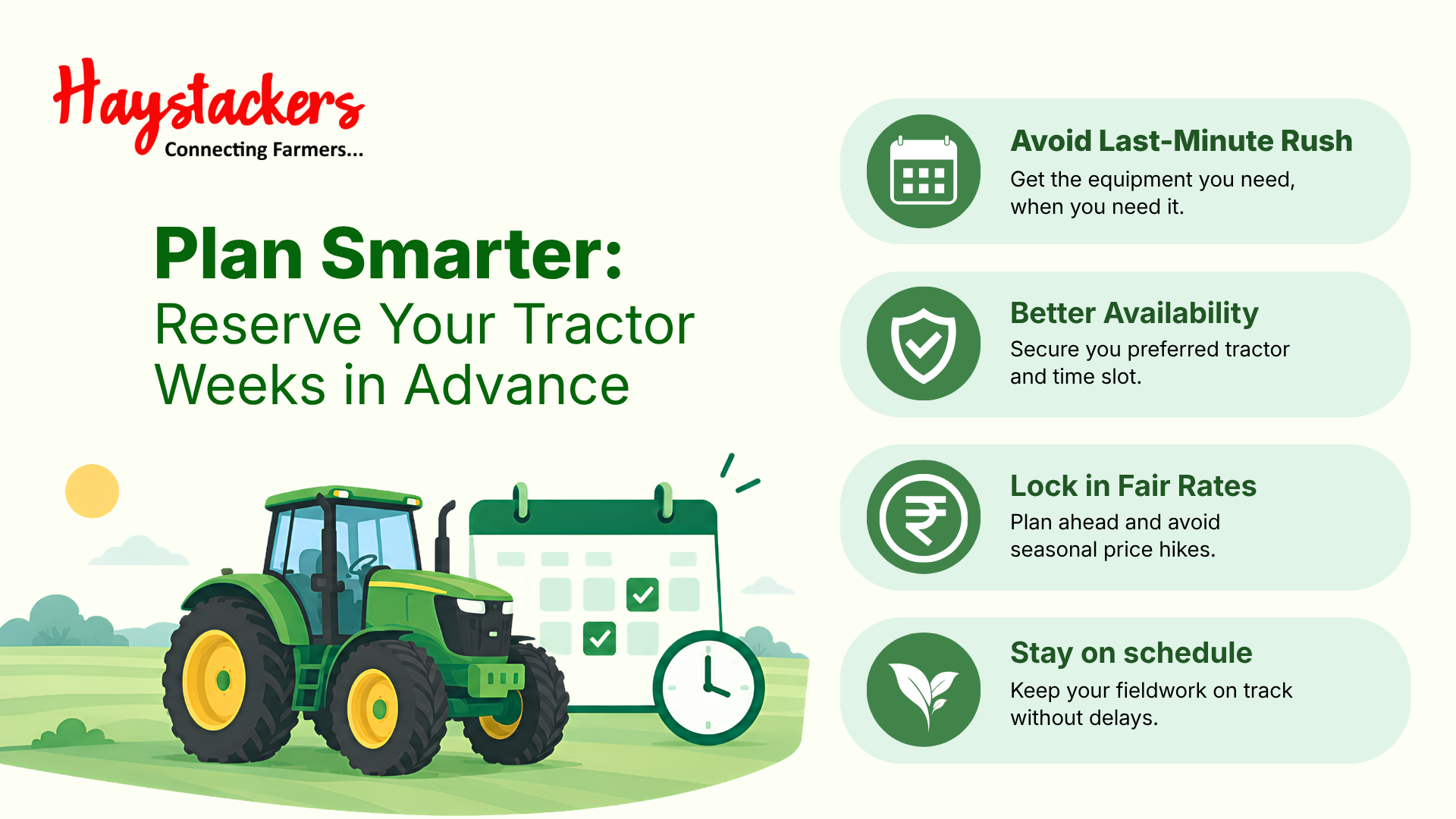
Tractor Rental Agency
A short pre-season routine avoids most scheduling headaches. Verify the specific days a task needs to be completed, not just the month. See if the owner's weather cancellation and rescheduling policy applies when weather alters the schedule. Find out if you'll be delivering or picking up, as you'll find transportation really adds up over an extended run. Verify coverage on both ends and read recent reviews from other rentals in the location, then take these five quick minutes to save you hours of panicked last-minute planning that end up costing more.
A backup plan also makes life easier. No matter how
good the plan, weather can change, mechanical failure occurs and two friends
want the same machine at the same time - which is why a second listing close
by, or a loose date window, can make a difference between a delay and a lost
week.
This is exactly the planning gap a peer-to-peer
marketplace like Haystackers is built around. Because listings come from
working growers renting out machinery sitting idle between their own tasks, the
available inventory tends to match real regional demand instead of a
dealership's fixed stock. Every booking carries insurance coverage, and support
is available around the clock if a question comes up mid-season. For someone
mapping out planting or harvest dates months ahead, it helps to know about
farm equipment's rentals in online, checking a live calendar of nearby
machines rather than cold-calling a list of numbers and hoping something is
free.
It always takes more and costs more to rent a tractor or baler during your season's most hectic week. But online, seasonal-optimized rental listings enable growers to peek at the availability, prices, and condition of equipment for planning weeks ahead of time and reserving before a local crunch. The next step is clear: schedule your operational calendar, see what is currently available, and make reservations early.
Know More About Seasonal Rentals.
Q: How far in advance should you book seasonal machinery?
A: The majority of experienced growers schedule their next planting or harvest window four to six weeks out as availability begins to get competitive for the season's prime timeframe.
Q: How does peer-to-peer equipment booking compare to a dealership's rental?
A: It can be, as long as the listing has actual condition info, insurance, and dates available. The quickest way to tell if it's real is by examining reviews from other renters.
Q: What is the average cost for different seasonal equipment to be booked online?
A: Small to midsize tractors average $150-$350/day or $450-$1,000/week, depending on horsepower, attachments, and the length of delivery.
More articles





Haystackers is a peer to peer community-based platform facilitating direct rentals of tractors and farm equipment from individual farmers to those in need.
© Copyright 2026. Haystackers. All Rights Reserved.


© Copyright 2026. Haystackers. All Rights Reserved.