Farm Equipment Rentals
American farmers are relying increasingly on rental
equipment because buying everything required for the job simply isn't practical
given high price tags, variable workload needs, and maintenance concerns. The
Internet is making it easier to locate local machinery for purchase or rent
when and how it is needed. This flexible approach helps renters access useful
tools while allowing equipment owners to earn from idle machines. For farms of
different sizes, equipment sharing is becoming a practical part of modern
agricultural planning.
Farming depends on effective timing. Getting a field
ready for planting and then having to spray, cultivate, and harvest at the
correct time is dependent on a range of machinery, which also comes at a cost.
Having a whole line-up parked up in the yard for use on just a couple of days
or weeks takes up money that could have been invested elsewhere. This could
include seed, water, labor, or fertilizer. That is why tractor rental
in US agriculture is attracting attention. Instead, farmers are simply
leasing the right tools for the right amount of time before sending them right
back after finishing their job. At Haystackers, this approach reflects our
broader push toward more efficient, local access and use of resources.
It may be that ownership gives you peace of mind and control and that you have financing costs, depreciation, maintenance, storage, repairs, and servicing, regardless of if you are using that machine every day. Rental lets farmers pay for access when the equipment can create value without carrying every long-term expense.
This model can help small and mid-sized farms, new
producers, and operations testing a crop. A farmer can use a specialized
attachment without investing permanently. Larger farms may rent extra capacity
when weather creates a narrow planting or harvest window.
Buying machines costs a lot, the weather can throw off the schedule, and finding seasonal help is a hassle. Not to mention, in some cases, it's just plain cheaper to shop around a bunch of dealerships or your network of people on some kind of internet app.
The trend also reflects a practical change in
thinking: a machine does not need to be owned to be useful. Renting suitable
nearby equipment can complete the job while preserving working capital. USDA
accounting guidance treats machinery capital recovery as a production cost,
reinforcing the need to compare access with ownership rather than looking only
at purchase price.
Rental can turn a large capital commitment into a planned operating cost. That being said, tractor rental prices in US markets are based on the following factors: Machine size, horsepower, attachment types, place and distance, period of rent, seasonality, and hours of the rental. Farmers should also factor in the transport cost, security deposit cost, insurance policy cost, and gas requirements.
The fact that something costs the least doesn't
automatically mean that it's the best deal. A reliable nearby machine may
reduce transport expenses and delays. Capacity matters too: undersized
equipment increases working hours, while an oversized machine may cost more
than necessary. The first things to consider are the job, acreage, ground
conditions, timing, and any implements you might need.
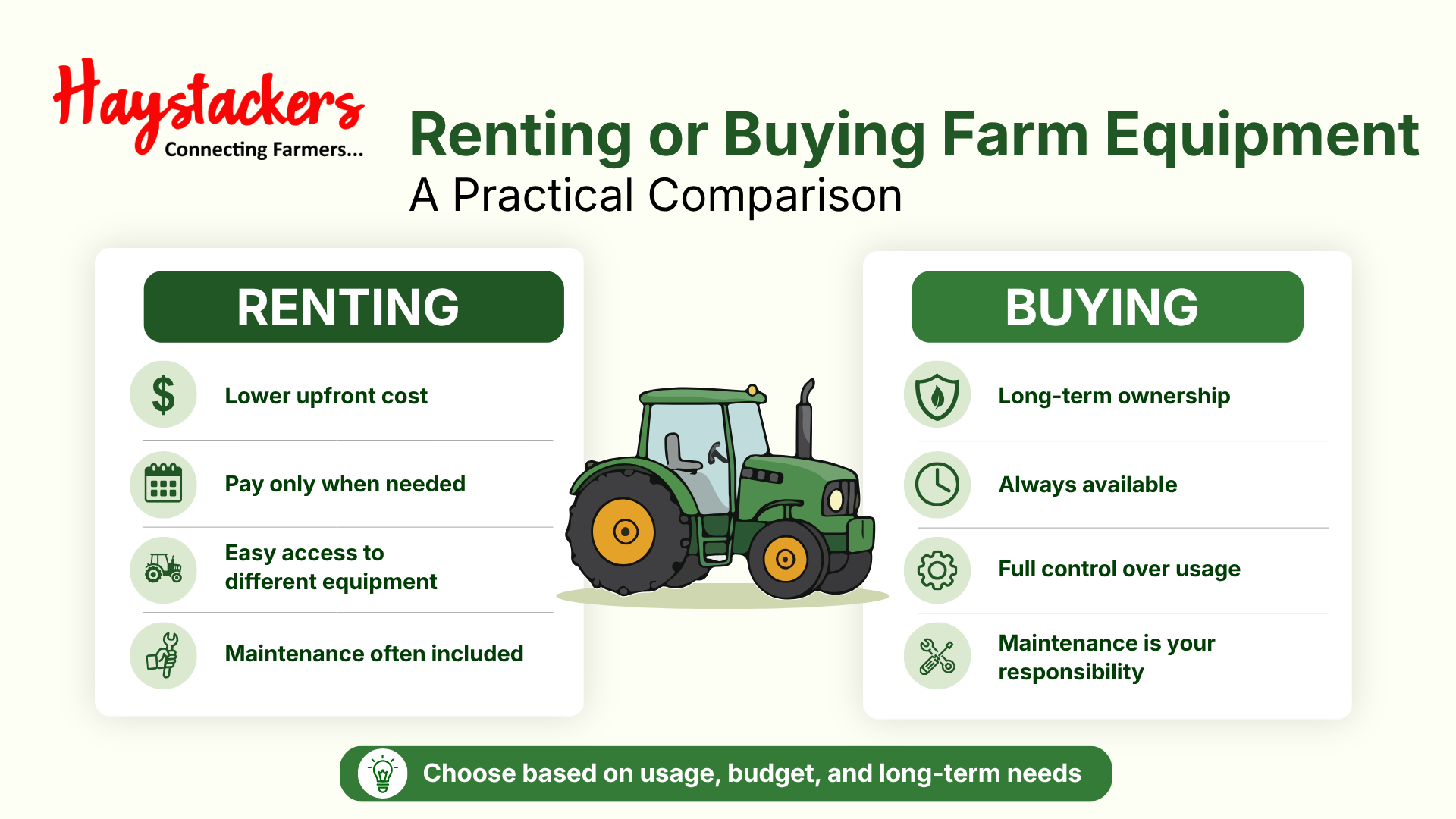
Sometimes buying a machine is necessary. For example, if you'll be using it constantly and need it for operations every day. And for fields where a machine performs a core duty all around the acreage. Ownership may also suit farms with trained operators, workshop space, and maintenance capacity. The best thing to do is weigh up whether it is worth the overall year price and how many times you see yourself needing/using it.
Short-term leasing is helpful for occasional,
intermittent jobs; to fill unexpected seasonal demand; to replace broken-down
equipment temporarily; or for individual, specific tasks. You might even see it
as an "on-farm test" before a potential buying decision.
Tractor Rental Agency
Rental options are available during all phases of a planting cycle. Growers might look to lease seeders, implements to prepare ground, mowing and harvesting equipment, sprayers or spreaders, loaders, specialized equipment to handle different types of crops, utility vehicles, and many more tools. This variety lets farmers match equipment to the task.
Access to farm equipment rental in US communities can help during breakdowns. An off-site backup can save the day for you if a critical machine goes down during an important period of time. Now, you don't necessarily need to do a lot if something breaks, but having an off-site backup can be a helpful alternative.
Owners also benefit. Machinery often remains idle
between planting, maintenance, or harvesting periods. Listing it can create
extra income and improve the return from an existing asset. Local sharing
strengthens rural connections. Renters find machines closer to their fields,
while owners reach farmers with temporary needs. Haystackers connects both
sides through a peer-to-peer agricultural marketplace. Clear listings, accurate
availability, and direct planning make rentals more efficient.
Define the job first: acreage, crop, terrain, horsepower, attachment, work dates, and estimated hours. Check that the machine connects safely with equipment already on the farm. Identify all your compatibility kinks before picking up.
Make sure to thoroughly read the listing and review the condition of the bike, rental terms, cancellation policy, and what you'll need to do for fuel, cleaning, travel, and any damages.
Ensure there are no age restrictions to ride it or training you'd need. Add a weather buffer when possible. Planning can prevent downtime and surprise charges. At handover, inspect the equipment and photograph its condition. Some basic checks will suffice, but remember to ask questions about how things are supposed to work and any restrictions the equipment or vehicle might have. Please adhere to the guidelines laid out by the manufacturer, and report any issues as soon as possible. This mindful approach ensures safety for you, the lender, and the next user.
Online platforms reduce the time spent calling equipment owners or checking inventory. Farmers can search by location and equipment type to know about farm equipment rentals in online marketplaces, review important details, and identify suitable options before making arrangements. This visibility is especially valuable during busy seasons, when every lost day matters. At Haystackers, our goal is to make direct equipment sharing accessible to American farming communities. A marketplace supports better decisions through clearer choices and easier connections. As more owners list idle machinery and more renters search locally, the network becomes increasingly useful for everyone.
Assess the work ahead and decide which machines are
worth owning outright versus equipment you'll only need at certain times of the
year. Look into alternatives available on our website—for instance, leasing a
full crop contract—and check any such agreement before contacting the owner
directly. If you plan carefully, you'll still have enough acreage to run a full
farming operation, complete with productive assets and equipment.
Rental agriculture equipment is emerging as an increasingly significant trend for the nation's farmers. It offers farmers greater autonomy in using machinery and frees them from the obligation to own every necessary machine. By accommodating seasonality and providing peace of mind during breakdowns, rental solutions can help reduce home stress. Farmers with equipment will benefit from income opportunities derived from seldom-used machinery.
Haystackers connects renters and owners through our real-time, peer-to-peer equipment marketplace. We look forward to a more adaptable, resilient, and connected future that comes from increased access to equipment.
👉Turn
Equipment Downtime Into Revenue—LIST NOW
1. When should a farmer rent equipment instead of buying it?
Renting is often suitable when a machine is needed occasionally, for a short seasonal period, during a breakdown, or before deciding whether to purchase. Farmers should compare the complete rental cost with annual ownership, storage, maintenance, financing, and depreciation costs.
2. How early should farm machinery be reserved?
Book as early as possible before planting and harvest peaks. Availability can tighten when many nearby farms need similar machines at the same time. Early planning also leaves room to confirm attachments, transport, operating requirements, and weather alternatives.
3. What should be checked before accepting rented equipment?
Confirm the machine’s condition, safety features, controls, fluid levels, tires, attachments, and compatibility. Record existing damage with photographs, understand the rental terms, and ask how to report a mechanical problem. Only a properly trained and authorized person should operate the equipment.
More articles






Haystackers is a peer to peer community-based platform facilitating direct rentals of tractors and farm equipment from individual farmers to those in need.
© Copyright 2026. Haystackers. All Rights Reserved.


© Copyright 2026. Haystackers. All Rights Reserved.